YOU ARE HERE: SCHLOßFREIHEIT BIDS FAREWELL
Strolling Through Vanished Berlin

There are streets in Berlin which vanished through the turmoil of the Second World War, like Mathieustraße or Hollmannstraße in Berlin-Kreuzberg and Sankt-Wolfgang-Straße or Hohe Steinweg in Berlin-Mitte.
Then there are streets that disappeared as a result of new urban planning - vanished leaving no traces but perhaps a name. Here is one of them: Schloßfreiheit.
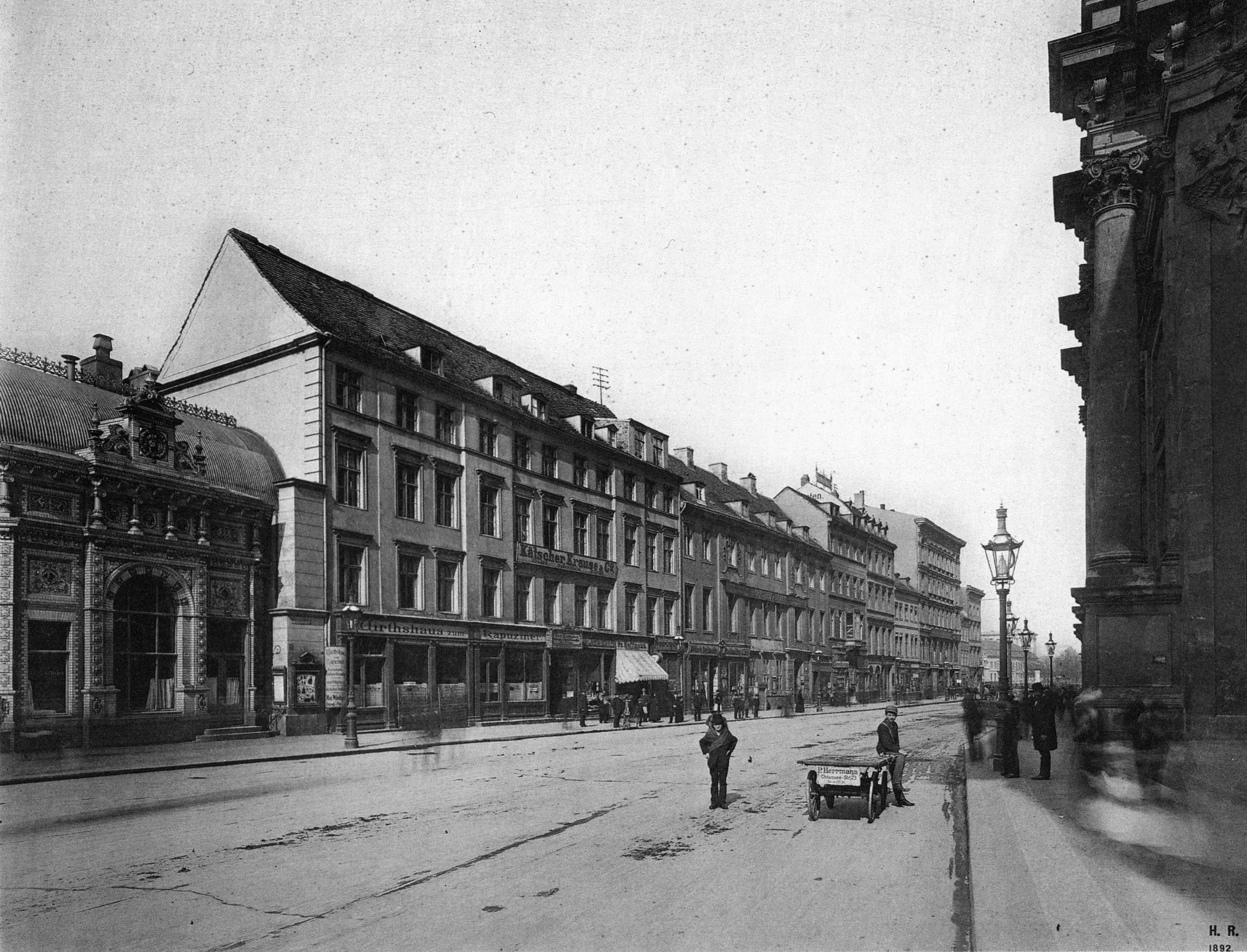
It used to run along the western facade of Berliner Stadtschloß, separating the palace from the Spreekanal and created at the behest of the Großer Kurfürst (Great Elector( Friedrich Wilhelm. In 1671 he ordered that the muddy, soggy embankment of the Spreekanal along the palace be fortified by a group of selected wealthy citizens - the latter were to build houses there (not a cheap venture, mind you).
In exchange they would be freed from certain duties, like having to offer obligatory accommodation to Elector’s soldiers (these being the pre-barracks days) or to go on sentry duty patrolling the streets. There were strong financial incentives, too: no property (plot and building) tax and freedom of trade - they could pursue nearly any business they chose.
That is why the houses lining the street housed many a different trade, from wallpaper manufactures to (a bit later, of course) photo studios. But the most important ones were - and that from the go - public houses and cafes. In the 1860, the soon to become legendary Berlin coffee house, Café Josty (a popular pastry shop opened by two brothers Josty) moved here from around the corner. In the 1890s they would move again this time to their best-known location at Potsdamer Platz.
Yet the most renowned cafe in Schloßfreiheit was Café Helms - the barrel-roof building on the left edge of Hermann Rückwardt’s 1890 photo. Built in 1882-1883 where the old Werder Mills used to be, it was one of the first pre-fab truss buildings in Berlin. It would be demolished along with the rest of the street only ten years later: Kaiser Wilhelm II, not a fan of the street’s architecture (which bothered him as too proletarian and too close to his imperial lair) had it removed.
Instead, Prussian ruler gave the city one of the most preposterously overloaded public-space artworks it would ever see: a memorial to his grandfather, Kaiser Wilhelm I, Kaiser-Wilhelm-Nationaldenkmal. Or, das Kleine Zoo vom Wilhelm Zwo (Little Zoo of William Two) as Berliners were quick to dub it due to the staggering number of animals featured therein. 157, to be exact, including among others: 21 horses, 32 lizards and one frog…

The name Schloßfreiheit vanished from Berlin maps in 1951 as the post-World-War-Two ruins of the Stadtschloß were blown up. The remaining plaza became Marx-Engels-Platz - a name it bore until 1994. Since then you can find it on the maps as the western flank of the extended Schloßplatz. And looking at the photo which inspired this post, it is hard to believe that less than three years later its fate would be sealed.
Many thanks for reading Berlin Companion - feel free to comment, follow and share.


Das kleine Zoo von Wilhelm Zwo is sheer genius.
Nicht so klein, too.