
YOU ARE HERE: IN THE TENTS
Strolling through vanished Berlin

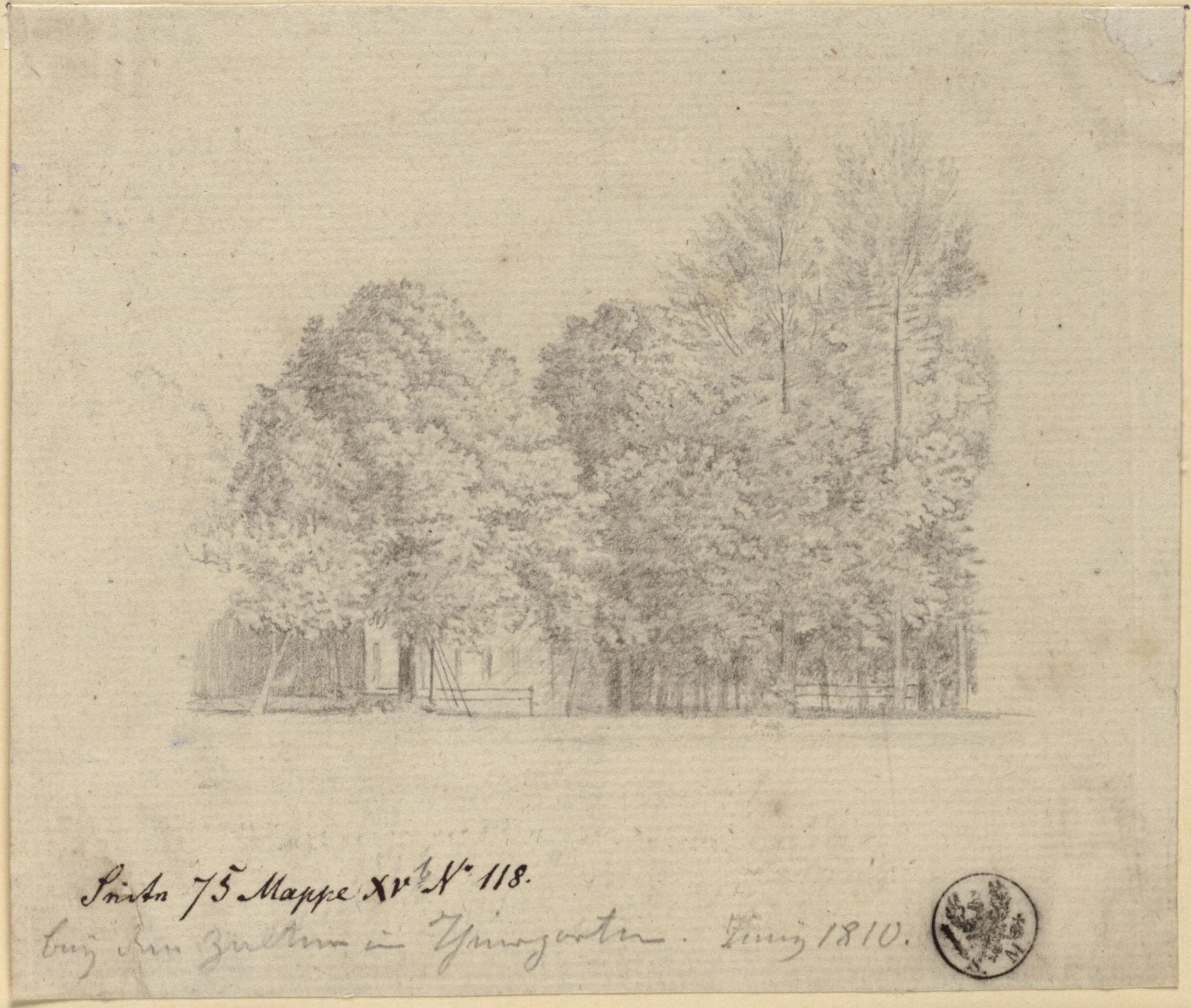
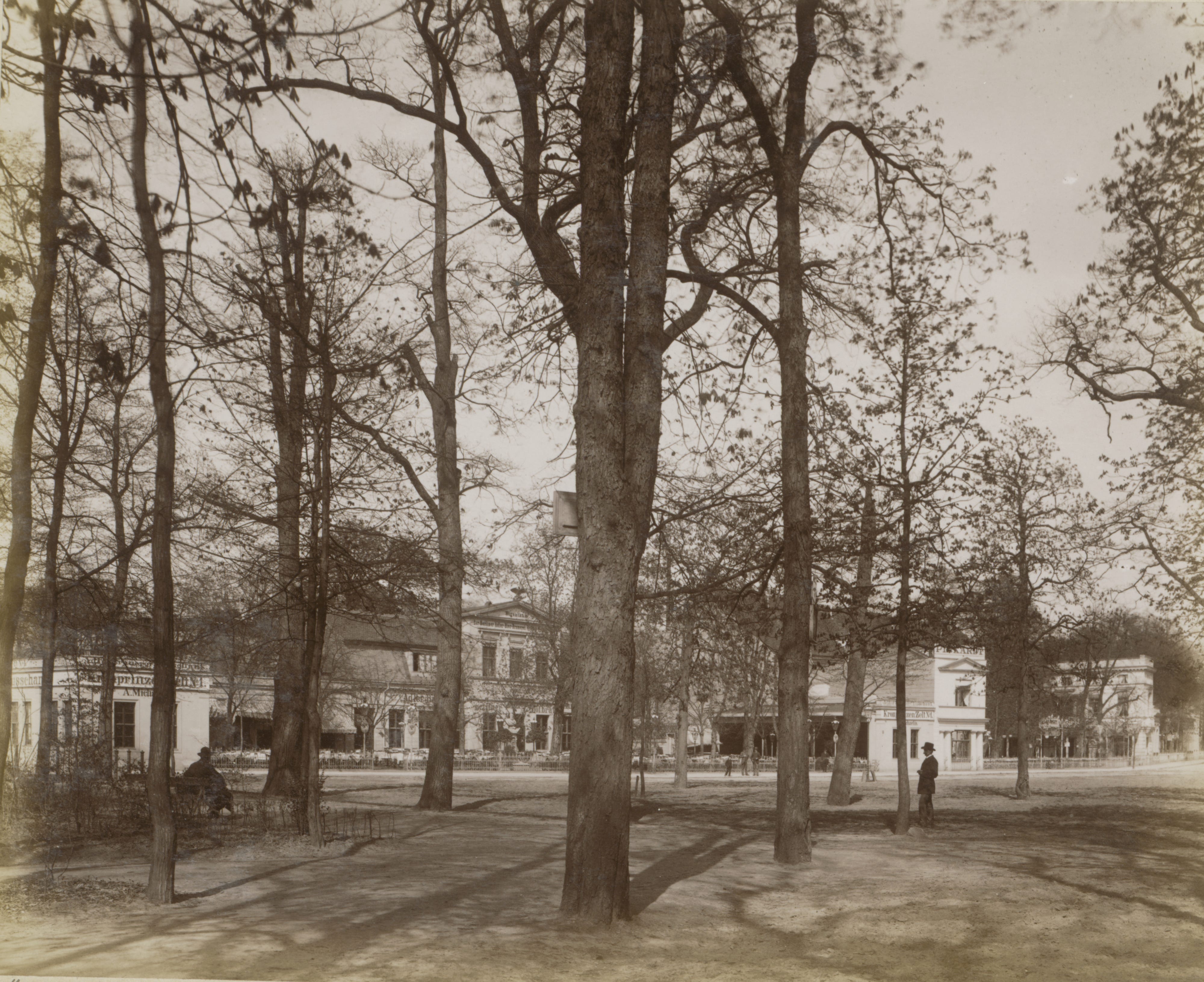
If you were to board a well-functioning time-machine (and I strongly advise you use no other sort as nothing is as distressing as landing in the wrong era or place) and if you travelled to the 1810 Berlin, aiming to touch down where Berlin’s “Pregnant Oyster” (Schwangere Auster is how Berliners dubbed Haus der Kulturen der Welt) stands today, this is the view you would be likely to encounter.
Lush trees in Berlin’s Tiergarten in the area long-known as In den Zelten (“In - or By - the tents”).
Die Zelten were established as one of the first outdoor socialising points in Berlin. Two entrepreneurial French gentlemen obtained a permit to install them as temporary locations (they had to be dismantled for winter) and to offer refreshments to the Tiergarten strollers and boat passengers on the Spree.
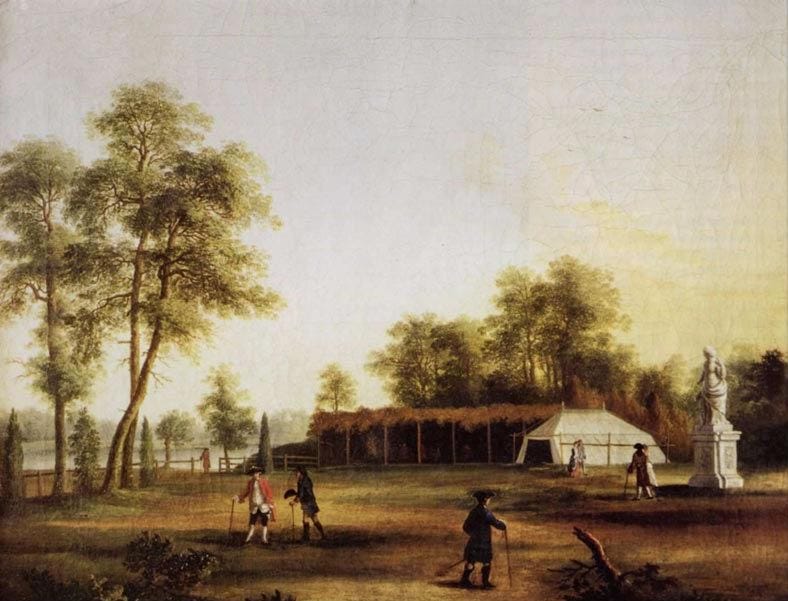
It has been said here many times before: the Huguenots, French refugees who settled in Brandenburgian-Prussian capital, did bring with them that certain je nais se quois that the city had been missing.
Die Zelten grew into more permanent structures and evolved into a place where the city’s leisure classes were more than happy to spend their free time and money. Which is not to say the beer gardens and restaurants were awfully exclusive: plenty of regular Berliners treated a cooling drink in the Tiergarten as an equivalent of a holiday.
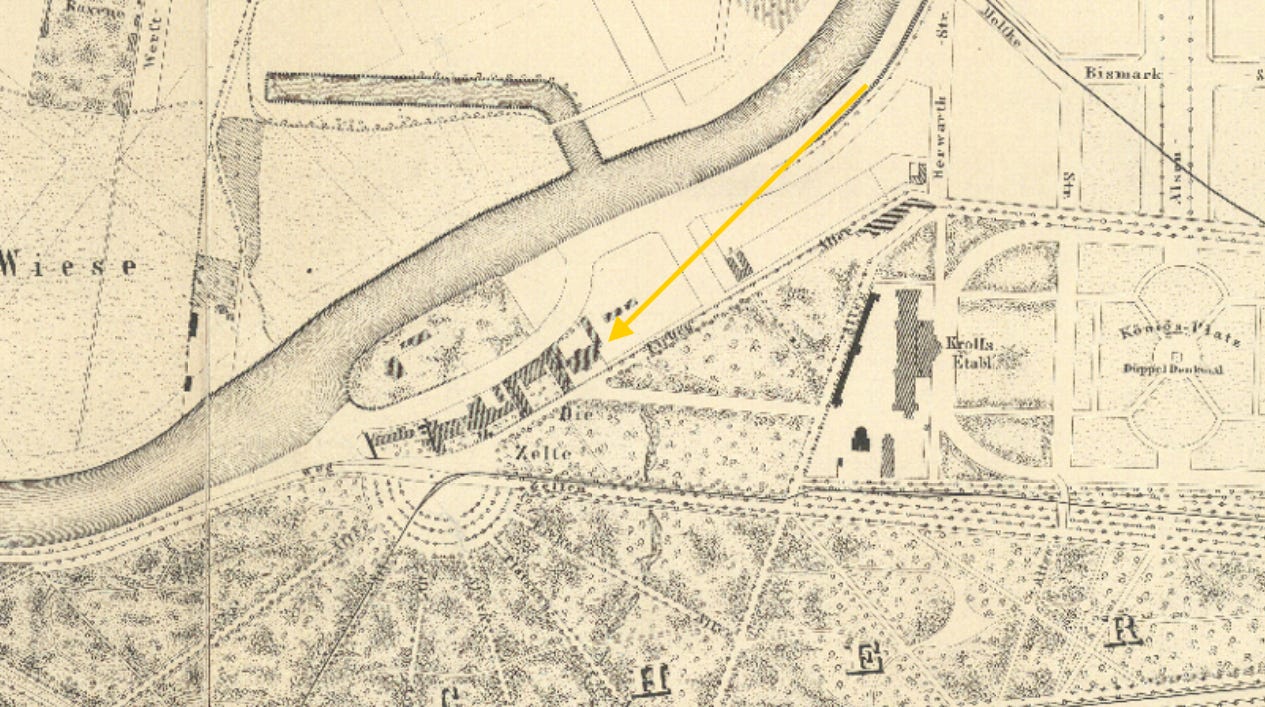
In den Zelten clearly attracted a lot of attention, especially from Berlin’s real estate investors. New upmarket residential buildings rose from the ground along brand new streets: Richard Wagner Straße, Beethoven Straße, Herwarth Straße and, last but not least, In den Zelten street. Among its better-known residents would be Bettina von Arnim (one of the early locals), Magnus Hirschfeld, Christopher Isherwood or the theatre director Max Reinhardt.
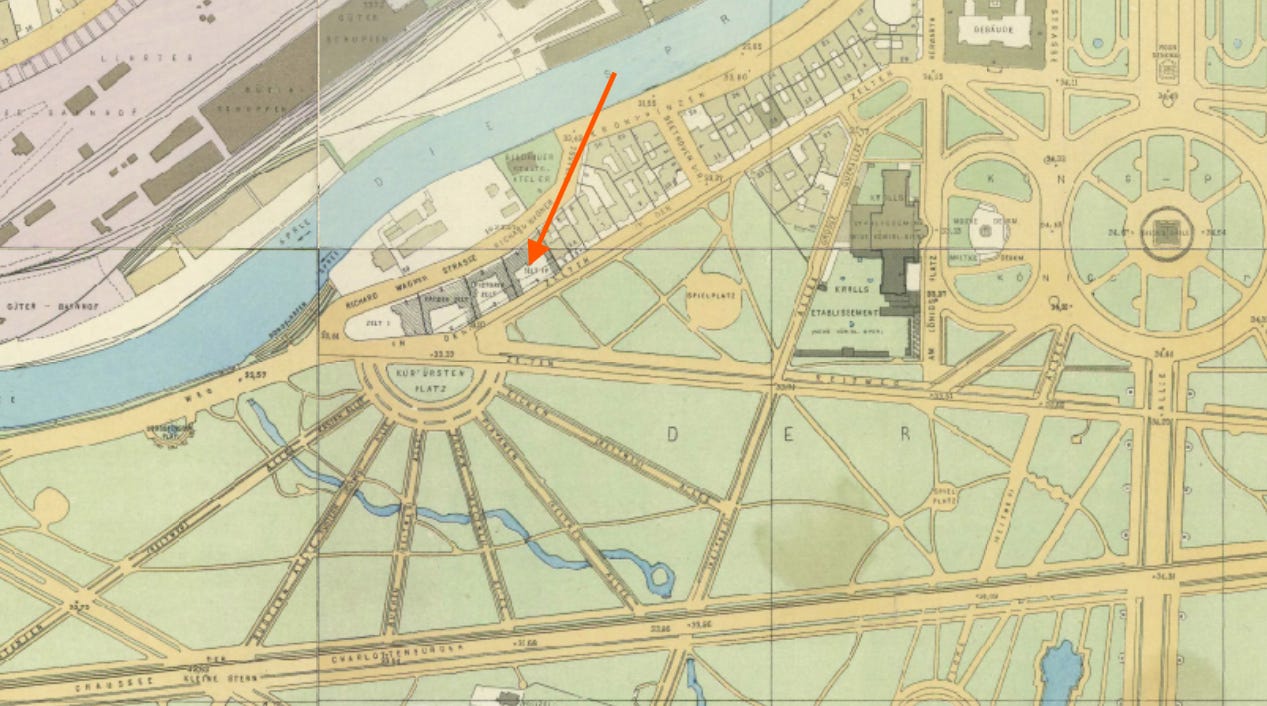
Die Zelten vanished abruptly in the dense clammy fog of the Second World War. Later the area would remain an abandoned, forlorn shadow of its own self. Until new urban planning for the federal government district would have its traces disappear for good.
Perhaps a bit sadly, these tents will never be pitched again.
If you enjoy reading about Berlin and its lesser-known past, consider becoming a subscriber. You can also simply buy the author a nice cup of coffee (black and hold the sugar;-)
If this city could speak, the stories it would tell.
Centrally featured in ETA Hoffmann's first published story, Der Ritter Gluck.