

Exactly a hundred years ago to the day Berlin newspapers informed their readers about the latest results of a crucial campaign running in the city: the signing of a petition for a public referendum which was to decide the fate of Prussian high-rank nobility.
Of land-, property- and factory-owners who also happened to have been born with a silver spoon - or, rather, a whole monogrammed silver cutlery set - in their mouths.
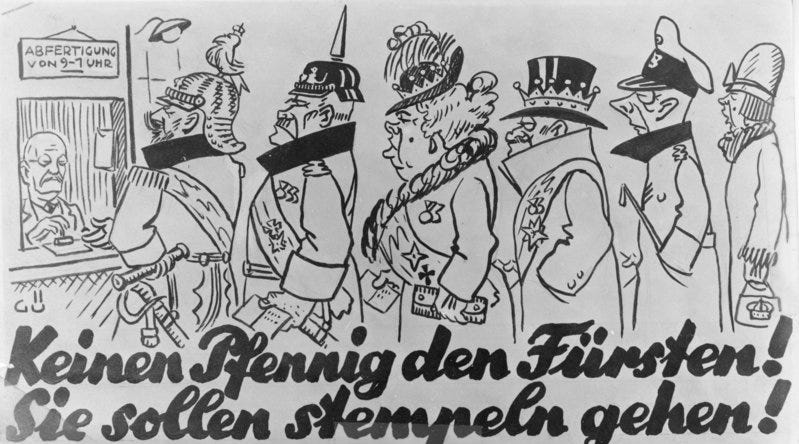
For the first time ever, German people were to decide what should happen to the Fürstenvermögen (“Princely Fortunes”), the vast wealth collected by the richest families in the land whose members were staunch supporters of the Kaiser and his First-World-War politics which left the country socially and economically ruined. Often, these were the people actively involved in the process, whether as top-rank military or as cabinet members, investors, etc. Now the national referendum could decide what should happen to their money and estates: should it all be returned to the super-rich or, rather, should it be nationalised without any compensation.