RUNDE SACHE: BERLIN'S HOHENZOLLERN PANORAMA
Today in Berlin: 21 January 1892

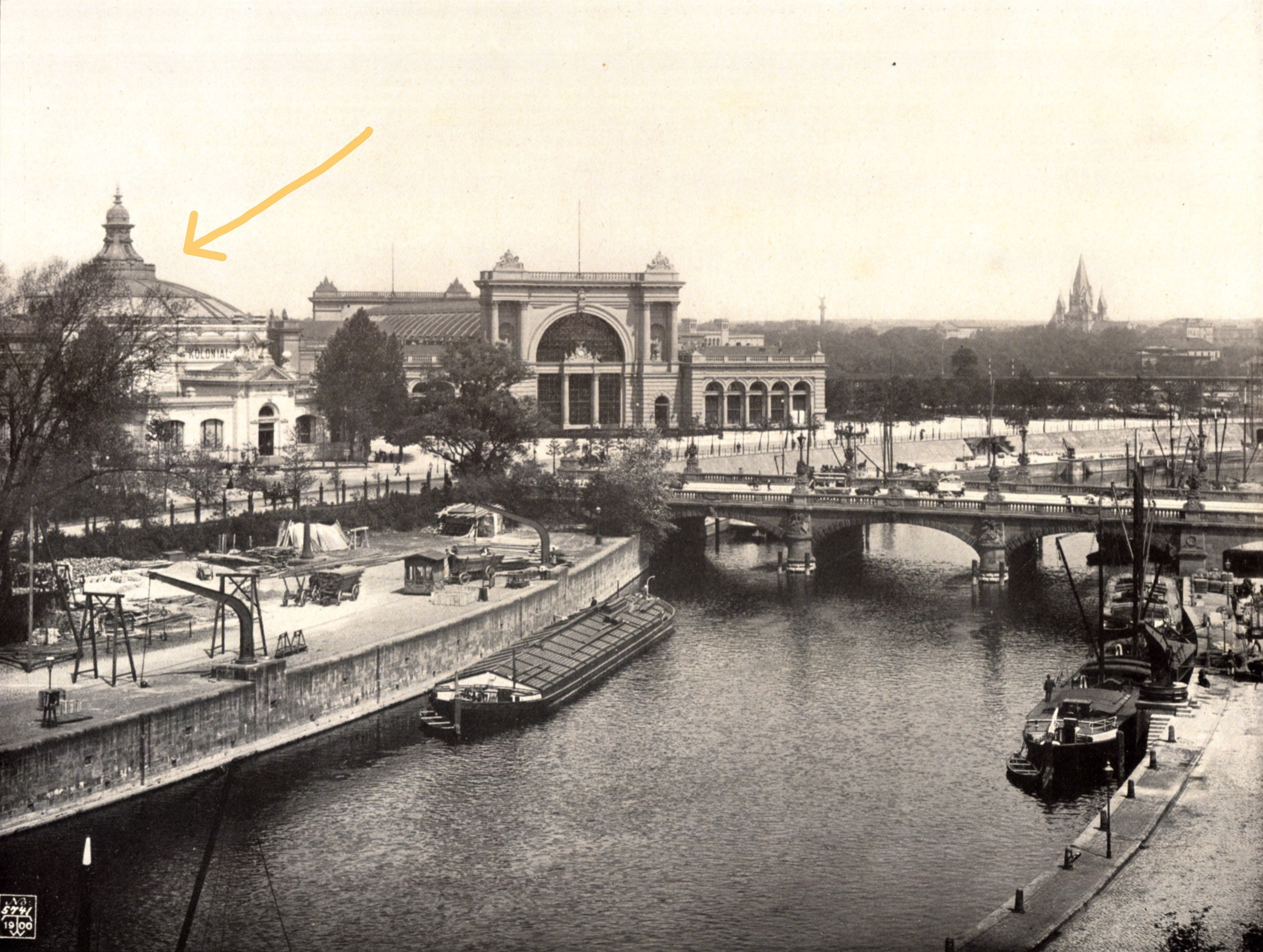
On January 21, 1892 the Hohenzollern-Galerie – a wooden rotund panorama building with a glass cupola for a roof - opened in Berlin Moabit near Moltkebrücke, just a stone’s throw from what was Berlin’s most elegant railway station, Lehrter Bahnhof.
The panorama celebrated several centuries of the Hohenzollern history - Prussia’s ruling house from the Great Elector Friedrich Wilhelm to Kaiser Wilhelm II. The “200 years of the Hohenzollerns”, a colossal work painted by Philip Fleischer, an artist from Munich, so impressed the Kaiser and his entourage that in February 1892 Fleischer was awarded a professorship in Berlin.
However, impressed as he might have been, only a year later, in 1893, Wilhelm II gave his consent to a refurbishment. The Hohenzollerns were swallowed by the sea. Figuratively speaking, of course.

The images glorifying the Hohenzollern rule in Prussia and beyond were replaced by what came to be known as Marine-Panorama, a 120-metre long painting by Hans von Petersen. His “Einfahrt in den Hafen von New York” (Entering the New York Harbour) was displayed in the octagonal domed building next to Lehrter Bahnhof.
It presented a 360° view from a bridge of a ship moored on the Hudson River: you got to see the Statue of Liberty, the panorama of the Hudson River itself and many, many ships.
Why would the Kaiser replace works praising his own forefathers (and praise them they did!) with what was basically a large maritime extravaganza - and one showing a foreign city, too? Well, first of all the painting was already there: it had been on display first in Bremen, big German harbour city and then in Frankfurt am Main. Panoramas, a popular form of public entertainment in the late 19th century, were itinerary shows. They travelled from one big city to another and often went abroad. So Petersen’s work arriving in Berlin was only a matter of time.
Such was Wilhelm’s delight at von Petersen’s work - his newly discovered love for all things maritime - that it is believed to have lead to Germany’s massive investment in the navy, or the Kaiserliche Marine. And, eventually and indirectly (taking a big leap here), to the First World War.
What Lange Kerls (Long Fellows), particularly tall soldiers, were to one of his forefathers, Friedrich Wilhelm I (aka “The Soldier King”), so were ships and sailors to Kaiser Wilhelm.
As for the Marine-Panorama building itself, it did not last beyond the autumn of 1928. Closed fourteen years earlier, in the midst of the war that might or might or might not have been caused by a picture of ships.

Thank you for reading, commenting and sharing. Please follow my Substack, if you haven’t yet, to learn more things you didn’t even know you wanted to know about Berlin. And huge thank you to all of you supporting the show!