
FROM BELLE-ALLIANCE TO MEHRINGPLATZ or WHERE STREETS GET NEW NAMES
Today in Berlin: 16 February 1946

Street names matter - they are far more than just signposts or guides for those lost in the jungle of the cities. Most of the time they honour people, commemorate places and are overall silent witnesses to the city’s or the country’s past.
Waldstraßen (“Woods Street”), Bahnhofstraßen (“Railway Station Street”) and Eiergassen (“Egg Lane”) have it easier - their “generic” names indicating an actual direction or purpose of the place itself. Their names tens to stick for centuries.
But street names with roots in history and/or in important historic events most likely won’t. That's because history is like Schrödinger’s cat: both dead and alive. What happened, happened and cannot be changed - unless you play deceitful games, trusting that “History is written by the victors”.
Or unless you do not insist on changing it but on modifying: explaining and emphasizing the importance of other events than had been pushed to the foreground before.
That is why we see changing street names as more than just switching labels. Inconvenient as it might be (and as it usually is), it moves the spotlight from people or events that we no longer hold for worthy of that attention. Usually because we no longer agree with what they stood for.
When on this day in 1946 one of Berlin’s three plazas designed by Philipp Gerlach for Friedrich Wilhelm I (aka Soldatenkönig) had its name changed from Belle-Alliance-Platz to Franz-Mehring-Platz, Berlin agreed its historic perspective: from celebrating Prussian victory over Napoleon to celebrating a Marxist with a sharp pen.
The plaza - whose circular shape inspired its original name, the Rondell and later a gem of urban und garden design - was located at the southernmost end of Friedrichstraße at Berlin’s southern city gate, Hallesches Tor. Several decades after Prussia paid Napoleon and his army back for invading it, humiliating its monarchs and stealing the Quadriga, many streets and squares south of the Landwehrkanal were named after important military leaders and victorious battles in Prussian Wars of Liberation. That’s when the Rondell became Belle-Alliance-Platz (Schlacht bei Belle-Alliance is what the Brits refer to as the Battle of Waterloo).
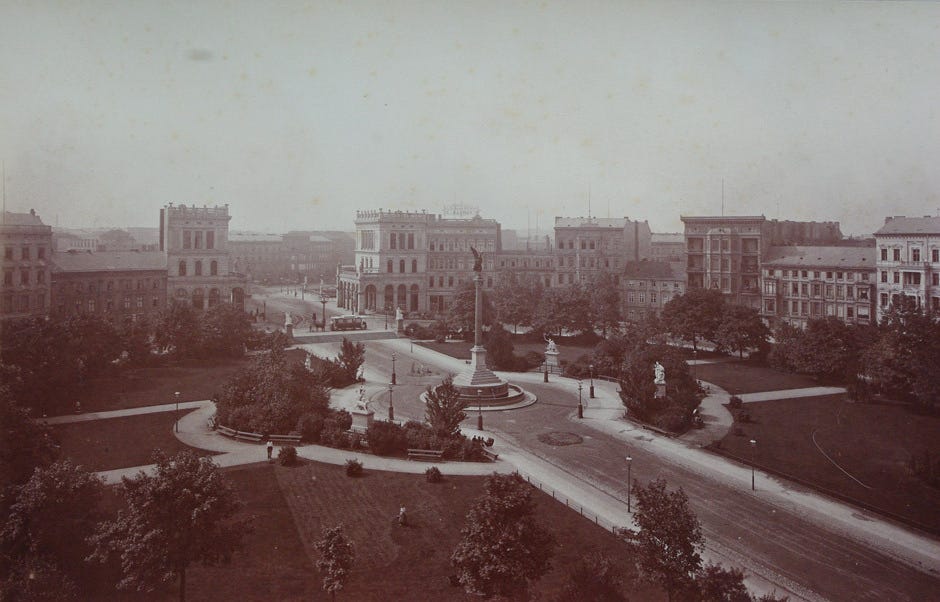
Practically swept off the face of the Earth in one of the worst Second World War air-raids on Berlin on February 3, 1945, and then damaged even further during the last (and completely futile) attempt at stopping the Red Army troops approaching from the south, the plaza survived in its name only. But not for long.
The idea came from the Department for Public Education of the Groß-Berlin Magistrat (it was before the separation of Greater-Berlin’s City Council into the western Senat and the eastern Magistrat). On February 13, 1946 - the 100th birthday of renowned Berlin Social-Democrat and journalist, Franz Mehring - they presented it on a larger forum and got the necessary support. It was the right moment, too: Berlin’s streets and plazas named after Nazis or Prussian militarists should be re-named to honour their opponents. And since Mehring, a Marxist publicist, wrote for the SPD newspaper the “Vorwärts” and the latter’s building was just around the corner in Lindenstraße (as if by miracle it survived the inferno, only to be demolished by West Berlin Senate), Franz-Mehring-Platz it was.
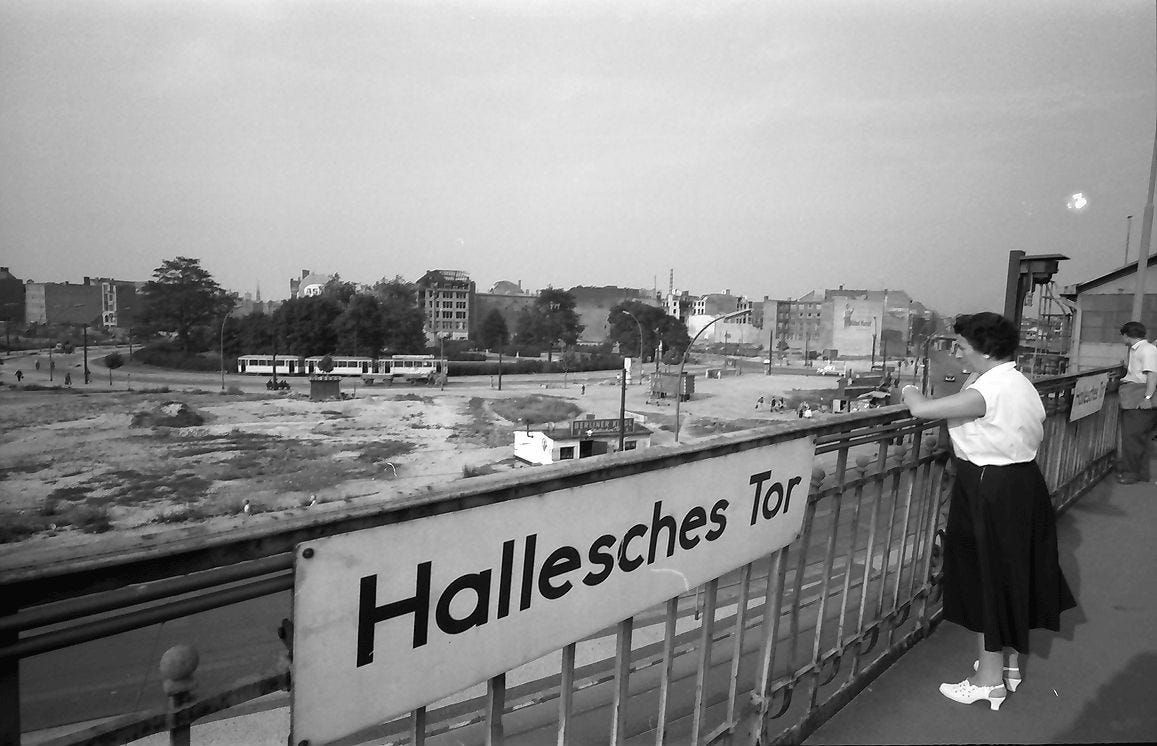
One and a half year later, on July 31, 1947, that name was shortened to Mehringplatz instead.
In 1972 the old plaza before the destroyed and demolished Küstriner Bahnhof in Berlin-Friedrichshain (not far from today’s “Ostbahnhof”), known as Küstriner Platz and completely refurbished at the time, got re-labelled “Franz-Mehring-Platz”. So be careful when choosing your route through Berlin: it can be completely different without “Franz”.
Thank you for reading Berlin Companion. Please subscribe, if you haven’t yet, to comment, follow and share. Paying subscribers also receive exclusive stories from our vast treasure trove of lesser-known Berlin facts, past and present.
Couldn't agree more about the scrapping of historic names,, and 'Belle-Alliance' was fairly uncontroversial in that it celebrated an alliance with Britain!