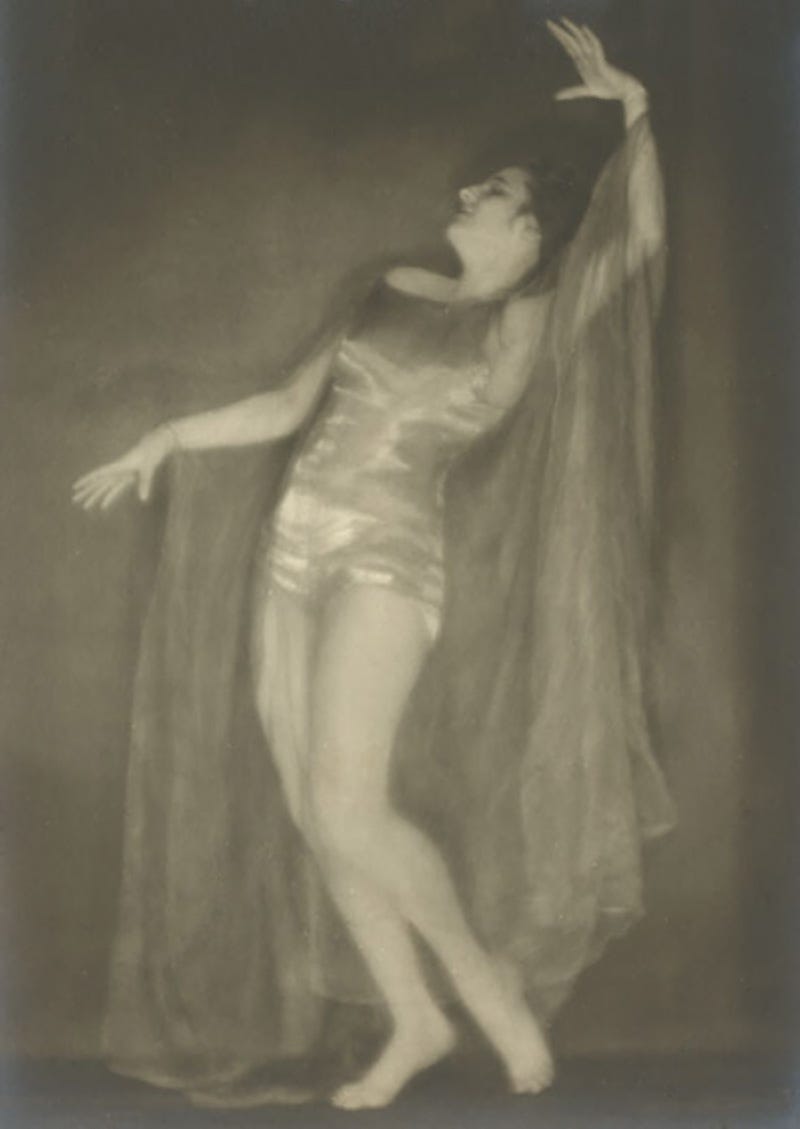
DANCING ON BURNING COALS: FAKE NEWS
“This stunning girl [...] is no doubt striving earnestly for a place alongside the three who are taken seriously: Impekoven, Wigmann [sic], and Gert1.
And when one sees this fully-formed, tall creature standing surrounded by music, a premonition stirs that there might be glories in dance which none of those three were granted to bear or cherish — not the heroic gong-like beat of Mary, not the sweet violin run of Niddy, not the cruel drum of Valeska: the glory of the dancer, which returns every thousand years, that of perfect, powerful grace, of unparalleled beauty, of the image of God.
But then this girl begins to unfold her body, the sense of wonder fades, the radiance turns grey, the sound rusts; this marvellous dummy moves [...] And there remains [...] just quiet sorrow that such outward perfection is not blessed with the grace of blood, the glory of genius, the torch of the demon.”
The girl would go on to become a celebrity herself (although of a rather doubtful kind), far surpassing her role-models and teachers in fame.
But in her autobiography she would cut Fred Hilderbrandt’s review of her performance short, leaving out the last paragraph altogether. She never liked being criticised. Or, come to that, being asked about her Nazi past - of which there is enough to fill in a whole library of books.
Born in 1902 as Helene Bertha Amalie, better known as “Leni” Riefenstahl.

Niddy Impekoven, Mary Wigman and Valeska Gert were all highly popular and respected dancers of the 1920s, who very often performed in Berlin