
BERLIN CALENDAR: LIGHT AND LIDO IN THE JUNGFERNHEIDE
Today in Berlin: 27 May, 1923

The 1920s in Berlin - you can sum them up in one Charles Dickens quote: “It was the best of times, it was the worst of times, it was the age of wisdom, it was the age of foolishness, it was the epoch of belief, it was the epoch of incredulity, it was the season of light, it was the season of darkness, it was the spring of hope, it was the winter of despair.”
No other era in the city’s history was as tragic, yet as bright. The latter not only because of the incredible rise of commercial illumination (neon lights) and the abundance of entertainment.
Its brightness lay also in the pace at which social projects were voted for and actually realised. It was the time of new modern residential estates, of unheard of levels of investment in affordable housing, of new schools, new hospitals and new sports venues. It was also the time when some Berlin’s favourite public parks were created.
One of them, Volkspark Jungfernheide, opened on this day in 1923 - the year of the hyperinflation nadir.
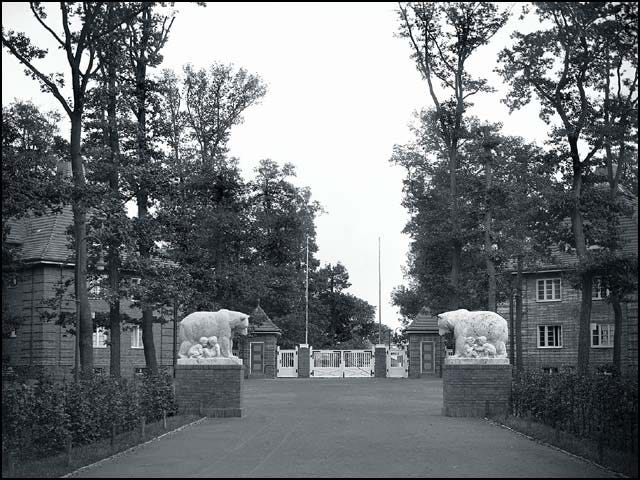
Designed by the unsurpassed, ingenious garden architect and park designer, Erwin Barth, it was created within the old royal hunting grounds in the Jungfernheide woods. Today, at nearly 150 ha it is the second largest designed park in Berlin.
For us, living over a century later, it might be hard to imagine what wonders it offered to grown-ups and, first and foremost, children who lived in its vicinity. The park, stretching along a straight East-West axis, had not only green meadows and comfy benches in the shade of ancient trees (Barth’s design incorporated the already existing Jungfernheide woods).
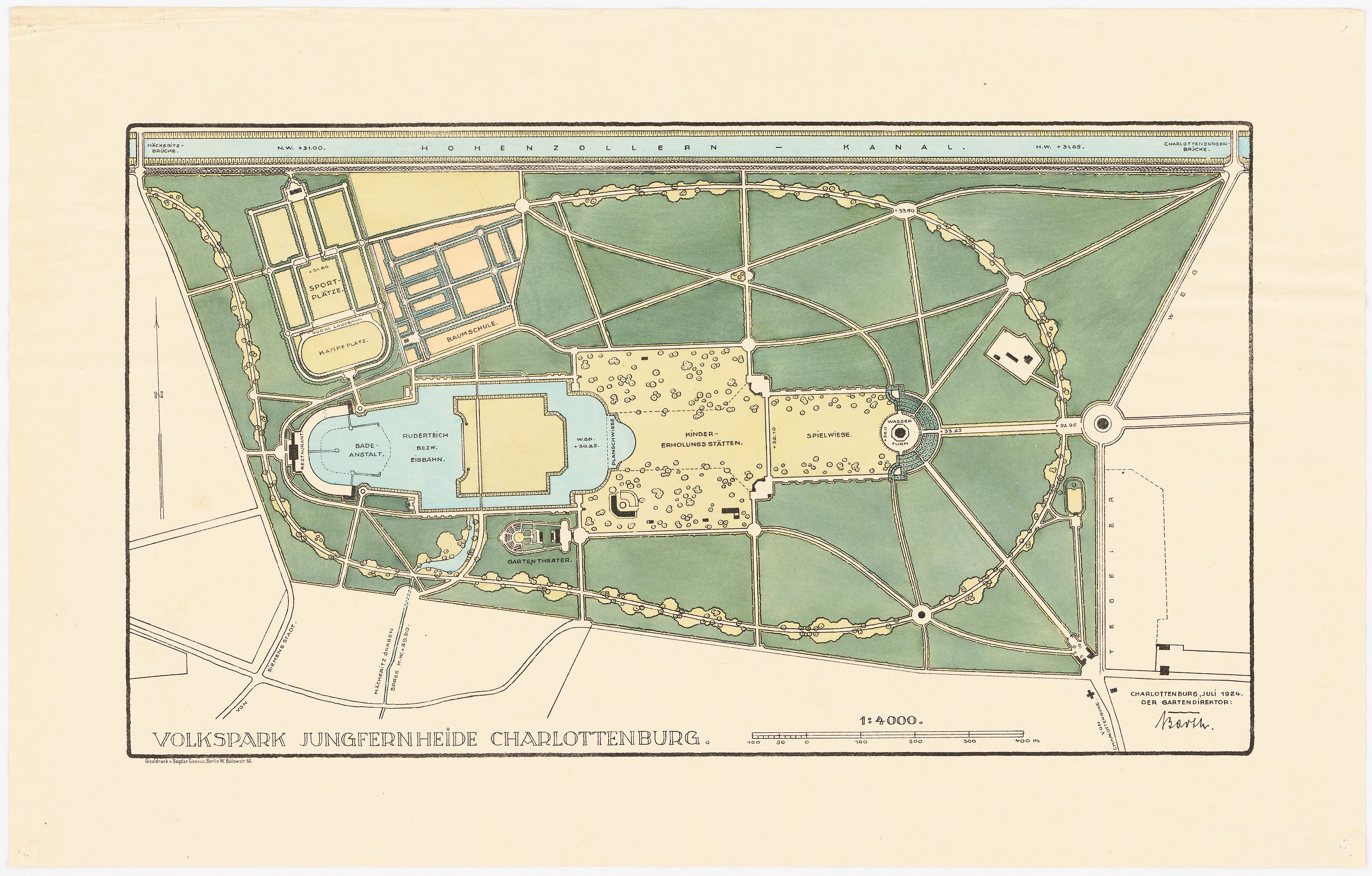
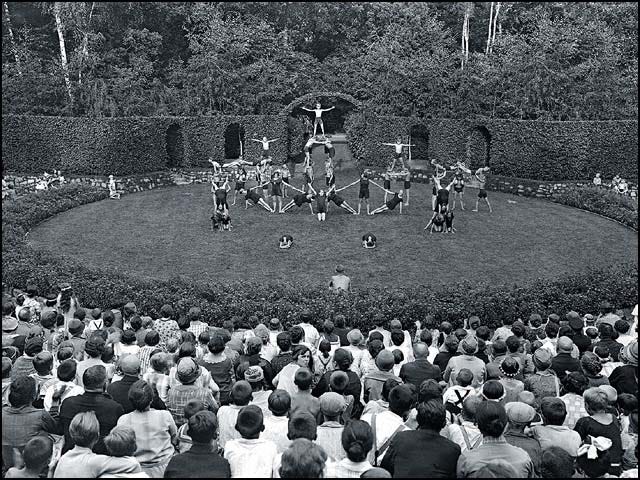
Following the main principle of Gestaltung in the 1920s German social and public architecture - Licht, Luft und Sonne (Light, Fresh Air and Sunshine) - it also had several sports fields, playgrounds, an open-air “nature theatre” where the stage was a circular piece of lawn surrounded by seats and a tall lush hedge separating it form the comings and goings around it. You could circumvent the park following a four-kilometre-long circular path (next to dozens of smaller ones).
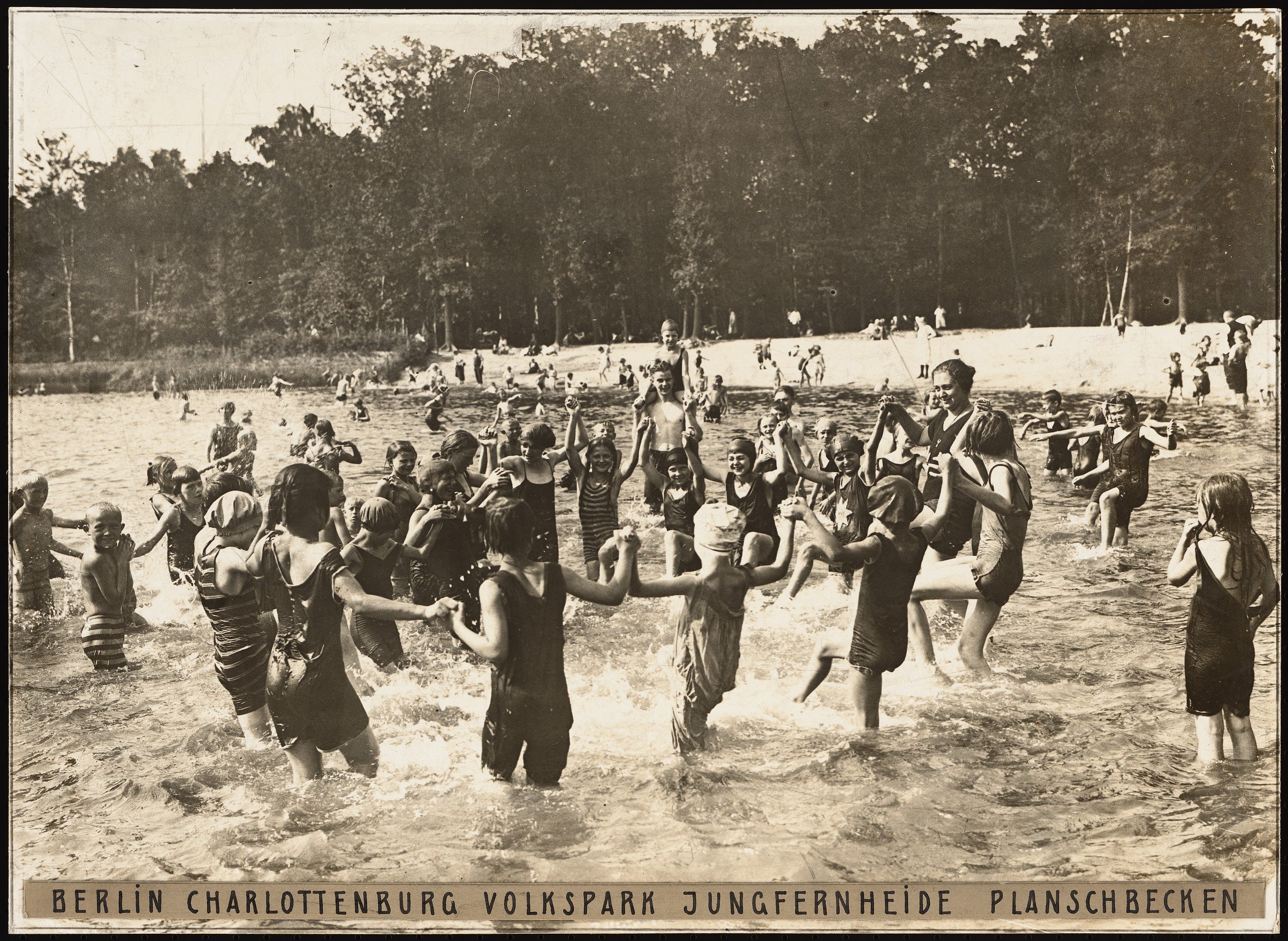
But first and foremost, it had a lido. The Jungfernheide Lido with a gorgeous sandy beach, marked bathing areas for the small and the older guests, with changing rooms, hygiene facilities and a restaurant.
A place which exists until today and can be easily reached from the city centre - with the U-Bahn.
Take any train on the line U7 (direction: Rathaus Spandau), leave the train at the station “Siemensdamm”, turn into Jungfernheideweg, walk past one of the most impressive 1920s Berlin residential estates, Siemensstadt, and you are there.
If you walk along the main axis of the park, at the other end of the small lake where the lido is located, you will find another, wild bathing spot (which is also free of charge).
On top of that today’s Jungfernheide offers a climbing park within the park, a beer garden, a café at the foot of the graceful 38-metre-tall water tower, and a petting zoo.
Berlin is full of enchanted places but its public parks must be its greatest treasure. Here is definitely one. And Erwin Barth, who - blind at the age of 53 - tragically, took his own life in July 1933, would have rejoiced knowing how popular and how frequented they still are in 2026.
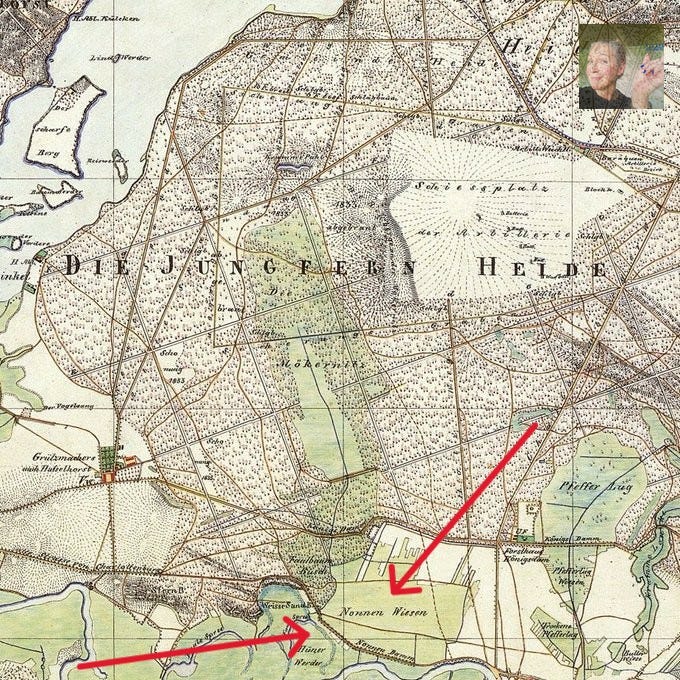
By the way, if you ever wondered, why Jungfernheide is called “Maidens’ or Nuns’ Heath” (the heaths interspersed the spreading woods): this 1835 map of Jungfernheide with Nonnen Damm (now Nonnendamm) and Nonnen Wiesen - Nun Causeway and Nun Meadows - shows places whose names referred to the Benedictine convent from Spandow (original spelling of Spandau) and nuns who owned that land. Nonnendamm was a road from the said Spandow to Berlin-Cölln built with convent's money.
Thank you for reading Berlin Companion. As ever, please comment and share with all other Berlin-fans out there.